


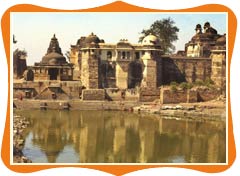
 The forts of Rajasthan are a reflection of the rich architectural legacy of Rajasthan. They are symbols of secular architecture - a unique combination of Mughal and Rajput traditions. These forts are found in almost all the cities and have certain common threads of architectural style running in them. These structures encompass mahals (palaces), Diwaan-e-Aam (public audience), Diwaan-e-Khaas (private audience), zenana (women quarters), chattris, bagh (garden), mandir (temples), and sils (galleries). Most of the fort complexes acted as full-fledged cities in themselves.
The forts were usually built atop a hill on the outskirts of the city to forbid any enemies from entering the kingdoms of the Rajput rulers. These majestic forts can surprise visitors by their external toughness but intricate and vibrant work by excellent craftsmen in the interiors. The forts of Rajasthan are, without a doubt, the true beholders of the intrigues, wars, and history of the royal houses of Rajasthan.
Jaigarh Fort (Jaipur)
Jaigarh Fort, also known as the fort of victory, is one of the three hilltop forts that overlook Jaipur. Situated approximately 15 km away from Jaipur, the fort was constructed between 15th and 18th centuries.
Amber Fort (Jaipur)
Constructed by Raja Man Singh I in 1592 and completed by Raja Sawai Jai Singh I, the fort is a fantastic blend of Mughal and Rajput architecture at its best. Made in red sandstone and white marble, the fort provides the spectators a magnificent sight.
Mehrangarh Fort (Jodhpur)
Built in 1459 by Rao Jodha and continuously being extended by other rulers of the royal house of Jodhpur till the 19th century, the Mehrangarh Fort is one of the most magnificent and impressive forts of India.
Jaisalmer Fort, Sonar Quila (Jaisalmer)
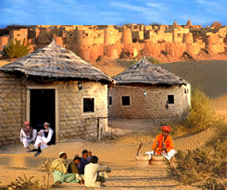
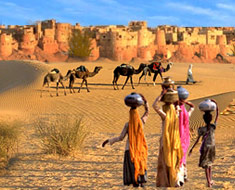
The Sonar Quila, or the Golden Fort, is ideally named so in the land of golden sand dunes of Thar Desert in Jaisalmer. Made of yellow sandstone, when the sun rays fall on the fort, it shines like bewitching gold.
Kishangarh Fort (Ajmer)
Built in 1649 by Maharaja Roop Singh, the fort is named after its ruler and is popularly known as Roopangarh Fort. The nine turreted fortifications encompass within it several battlements, jails, granaries, armories, and foundries.
Kumbhalgarh Fort (Udaipur)
Constructed in the 15th century by Raja Kumbha, this fort is located 64 km north of Udaipur. Like Chittorgarh, it is one of the significant citadels of Udaipur. Kumbhalgarh Fort is famous for the birth of the legendary Rajput King, Maharana Pratap of Mewar.
Nahargarh Fort (Jaipur)
Situated atop the rugged terrain of Aravali, the Nahargarh Fort was built by Raja Jai Singh in 1734 while extensions were made to it in 1868. This was the first fort to be built by the kings of Jaipur. The Nahargarh Fort literally means the 'abode of tigers'. Unfortunately, the fort is now almost in ruins due to lack of maintenance, the only well-preserved structure of the fort being Madhavendra Bhawan built by Sawai Ram Singh II which consists of a head suit for the king and twelve identical suits for his queens. At the fort, the visitors witness the actual feel of ancient royalty.
Junagarh Fort (Bikaner)
Built in 1593 AD by Raja Rai Singh, it is one of the rare forts of Rajasthan which is not built on a hill top. There is a moat encircled around the fort for its defenses. The fort, so far, has remained the unconquered fort of Rajasthan. The fort can be entered only by two main entrances, Karan pol and Suraj pol. The fort complex encompasses several magnificent palaces like, Phool Mahal, Karan Palace, Moon Palace, Ganga Niwas, Anup Mahal, and Rang Mahal or the Palace of Pleasure. Built in red sandstone and marble, the intricate jali work on the balconies, windows, towers, and courtyards is enthralling. The fort also houses a historic temple called Har Mandir and a museum displaying jewels, illuminated manuscripts, treaties, royal farmans, jars, and carpets, giving the onlookers an enriching insight into the royal past.
Taragarh Fort (Ajmer-Pushkar)
Built in 1345, the fort is situated at the centre of the state of Rajasthan. Taragarh Fort cuddles in the ultimate beauty of nature and is surrounded by picturesque beauty. The fort has six gateways and houses the Miran Saheb ki Dargah within its complex. On the largest rampart of the fort is a famous canon called Bhim Burj. In times of war and siege, the fort acted as a safe haven for people of the city. There are large reservoirs built within the fort that stored water in times of siege. The fort stands erect even today at the Nagpahari hill of Aravali ranges. This fort is one of the amazing examples of bygone architectural beauty.
Chittorgarh Fort (Udaipur)
The ruined Chittorgarh Fort is an outstanding example of military fortifications. It is situated 157 km from Udaipur and was built in 1440 AD by Raja Kumbha. It is a nine floored structure with seven gates for entrance. Ram pol and Suraj pol are the main entrances to the fort. Legend has it that it was Bhim, the Pandava, who started the construction of Chittorgarh Fort. The entire fort is adorned by sculptures of Hindu gods and goddesses. Within the fort complex are several palaces like the Fateh Prakash Palace, Rana Kumbha Palace, Ratan Singh Palace, and Rani Padmini Palace. In the year 1567 when the Mughal Emperor laid siege on the fort, Raja Udaisingh went into exile and since then, the fort was never resettled.


